SAS Webinar
Saturday, March 13, 2021
2:00 p.m. PDT
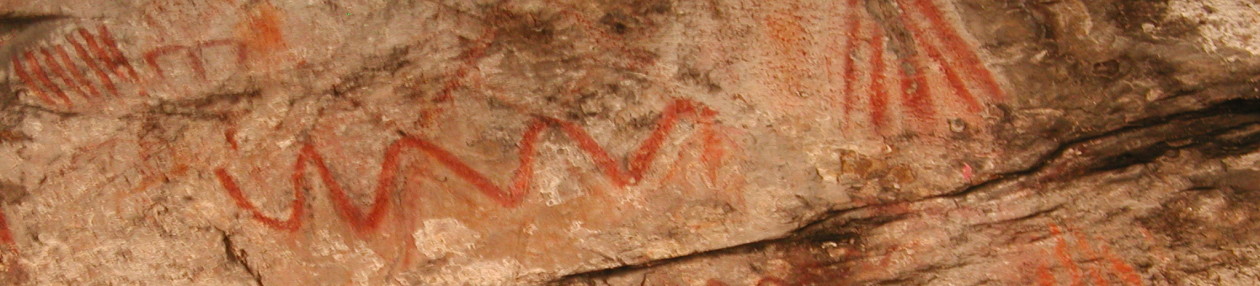
Seven Outstanding Petroglyph Sites in Central and Northwest California: Tales of Discovery and Collaboration
By Dan Foster
This presentation will discuss the early years of the Archaeology Program at the California Department of Forestry and Fire Protection (CalFire), and its successful outreach utilizing volunteers, landowners, and archaeologically-trained personnel. The result was some remarkable petroglyph site documentation. Dan Foster, a retired Cal Fire Archaeologist has first-hand experience with the discovery and recording of California petroglyphs.
Dan received a B.A. degree in Anthropology from California State University Stanislaus where he studied archaeology and cultural resource management under Dr. L. Kyle Napton from 1973-1977. During his 34 years of public service he developed and led an archaeology program for the CA Department of Forestry and Fire Protection to identify and protect cultural resources within the 30 million acres of State Responsibility Area lands. He has prepared detailed site records and reports for hundreds of archaeological sites including five published articles on prehistoric California Rock Art. He retired from State Service in 2012 and has become an active member of the Sacramento Archaeological Society.
Friends are welcome and also invited to join our organization. There is no participation fee.
Host, Paul K Davis is inviting you to a scheduled Zoom meeting.
Join Zoom Meeting
The webinar will start at 2:00. You may join starting at 1:30 to say “Hello”.
SAS Webinar
Saturday, February 13, 2021
2:00 p.m.
Peopling of the Tibetan Plateau: the occupation history and high-altitude adaptation
by Peiqi Zhang
Tibetan populations have successfully settled in the Tibetan Plateau for generations. As the largest and highest highland in the world, with an average elevation of 4,000 meters above sea level (masl), the Tibetan Plateau is not only surrounded by mountains and alpine peaks but also with many selective pressures for humans to live permanently on this plateau. However, when and how Tibetan populations permanently occupied the region are still under debate. To address these questions, the occupation history and evolution of Tibetans is critical. Therefore, to understand the process of human adaptation to this harsh high-altitude environment, here, the study starts from the human occupation history since Middle Pleistocene to the Holocene, then to investigate the behavioral and biological adaptations in the high-altitude plateau.
Peiqi Zhang. PhD candidate at University of Californis Davis, whose research interest is the Paleolithic Archaeology and Paleoanthropology, specifically about the behaviors and dispersals of Homo sapiens in eastern Eurasia including areas of Siberia of Russia, Mongolia, and China. Her research focuses on the hunter-gatherer migrations along the Northern route of modern human dispersal, and their response to environmental pressures during the movements, as well as the high-altitude adaptations to the Tibetan Plateau. In 2020 Peiqui received a scholarship from Sacramento Archeological Society, Inc. to pursue her research.
You may join early at 1:30 pm PST and enjoy a social half hour.
Saturday, January 30, 2021
2:00 p.m.
Projectile point enlargement in the High Andean Archaic: an experimental atlatl study”
by Caleb Chen
Archaic projectile points from the Andean Altiplano exhibit a curious trend of increasing size over time in contrast to a size reduction commonly observed throughout North America. We hypothesized that the increase compensated for decreasing dart momentum or accuracy resulting from shortening of atlatl parts as wood became increasingly scarce. Counter to expectation, our atlatl ballistic trials show that point enlargement significantly reduces penetration depth. However, we are unable to refute the accuracy hypothesis, leading us to suggest that Archaic point enlargement may have compensated for accuracy losses due to resource depletion on the Altiplano.
Caleb Chen is a graduate student at University of California Davis. He participated in the first U.C. Davis field school in the Andean Altiplano, Peru in 2019 and worked in the Forage Complexity Lab at U.C. Davis to replicated and experiment with an alpaca bone atlatl and atlatl darts to assess projectile point trends in the Andes Mountains. Caleb also received a scholarship from Sacramento Archeological Society, Inc. in 2020.
SAS Webinar
Saturday, January 16, 2021
2:00 p.m.
‘Evaluating the Dog as A Hunting Tool in Prehistoric Alta and Baja California: Preliminary Results’
by Jessica Morales
California hunter-gatherer(-fishers) archaeology has long focused in understanding forager decision making related to mobility, residency, subsistence practices, and technology. Notably, stone tools have dominated the discussion of technology in relation to human adaptation through time and space. Jessica’s dissertation project aims to bring dogs to the discussion of tools employed by California hunter-gatherers. The goals of my study are to (1) identify dogs from other canids in the archaeological record, (2) identify hunting dogs from other dogs, and (3) examine changes in key prey before and after the adoption of dogs. The first step involves a combination of traditional zooarchaeological methods, geometric morphometrics, and stable isotopes. This first step is crucial to begin to address the second and third steps. The preliminary results of the first step are presented in this webinar.
Jessica Morales is a graduate student at University of California Davis. She received an M.A. from California State University, Los Angeles, 2019 and a scholarship in 2020 to research hunting dogs..
SAS Webinar
September 19, 2020
2:00 p.m.
“Lovelock Cave Excavation – Its Contribution to the Science of Archaeology”
by John Foster
Lovelock Cave (NV-Ch-18) is a North American archaeological site previously known as Sunset Guano Cave, Horseshoe Cave, and Loud Site 18. The cave is about 150 feet long and 35 feet wide. Lovelock Cave is one of the most important classic sites of the Great Basin region because the conditions of the cave are conducive to the preservation of organic and inorganic material. John will discuss the exploration of Locklock Cave and highlight its significance in the evolving discipline of archaeological excavation.
John Foster attended U. C. Santa Barbara as an undergraduate and transferred to UCLA where he graduated in with a degree in Anthropology. He continued his studies at Long Beach State, where he was awarded an MA degree and then pursued additional graduate studies at the University of Arizona before returning to California to begin his career with State Parks. In 1975 John accepted a position work in the Cultural Heritage Section of State Parks in Sacramento. He became the assistant archaeologist to Francis A “Fritz” Riddell, the first California State Archaeologist hired outside an academic setting. He was assigned to “ride herd on the cultural resources of the State Park System,” and that has allowed him to record, investigate and preserve historic sites and archaeological features throughout California. Prehistoric rock art became a special interest to him because it allows a glimpse into the world view of its creator. John was president of SAS for seven years and continues to be a board member.
The webinar is free and open to all who are interested.
August 15, 2020
2:00 p.m.
“How to Make Sense of OSL without a degree in Physics”
by Tom Johansen, MD
OSL (Optically Stimulated Luminescence) is a method used to date archaeological sites and their associated artifacts. This technique uses the radiation dosimeter property of minerals such as quartz and feldspar. The method estimates when the mineral was last exposed to sunlight or sufficient heating. How does this technique really work and what are its limitations?
Tom will shine light on this topic with a description of physical attributes of light emitting sand particles and the use and limitations of OSL for archaeological dating at famous world-wide sites. Don’t miss this scholarly dissertation.